The challenge
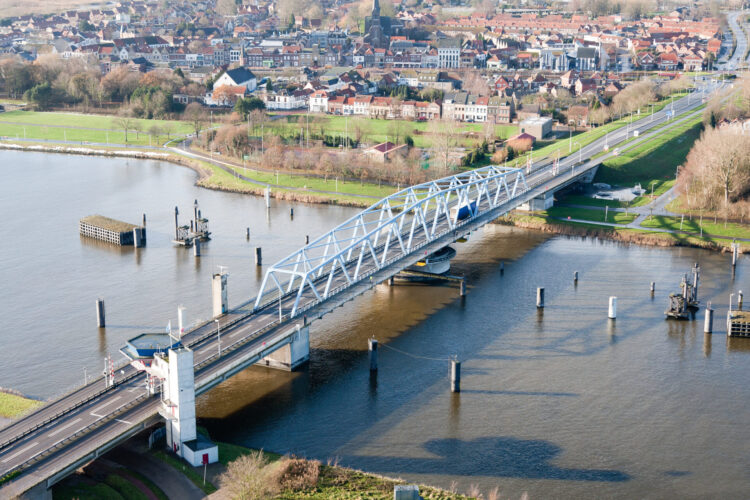
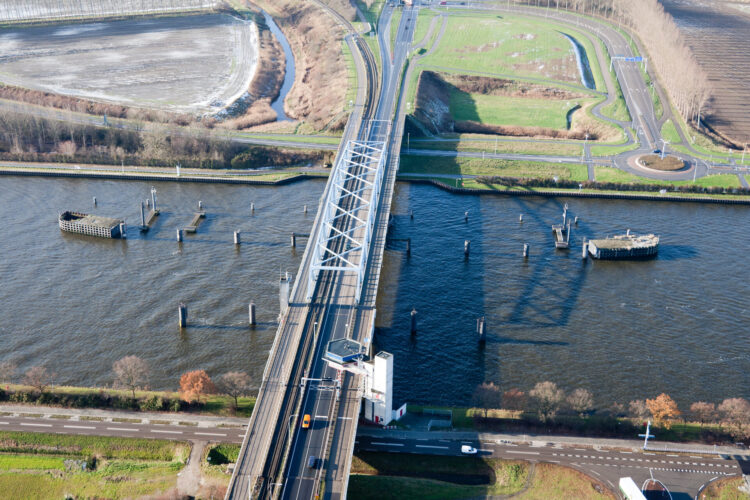
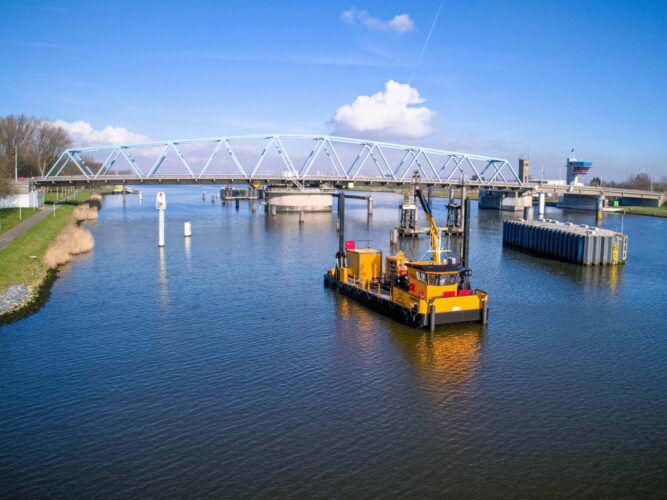
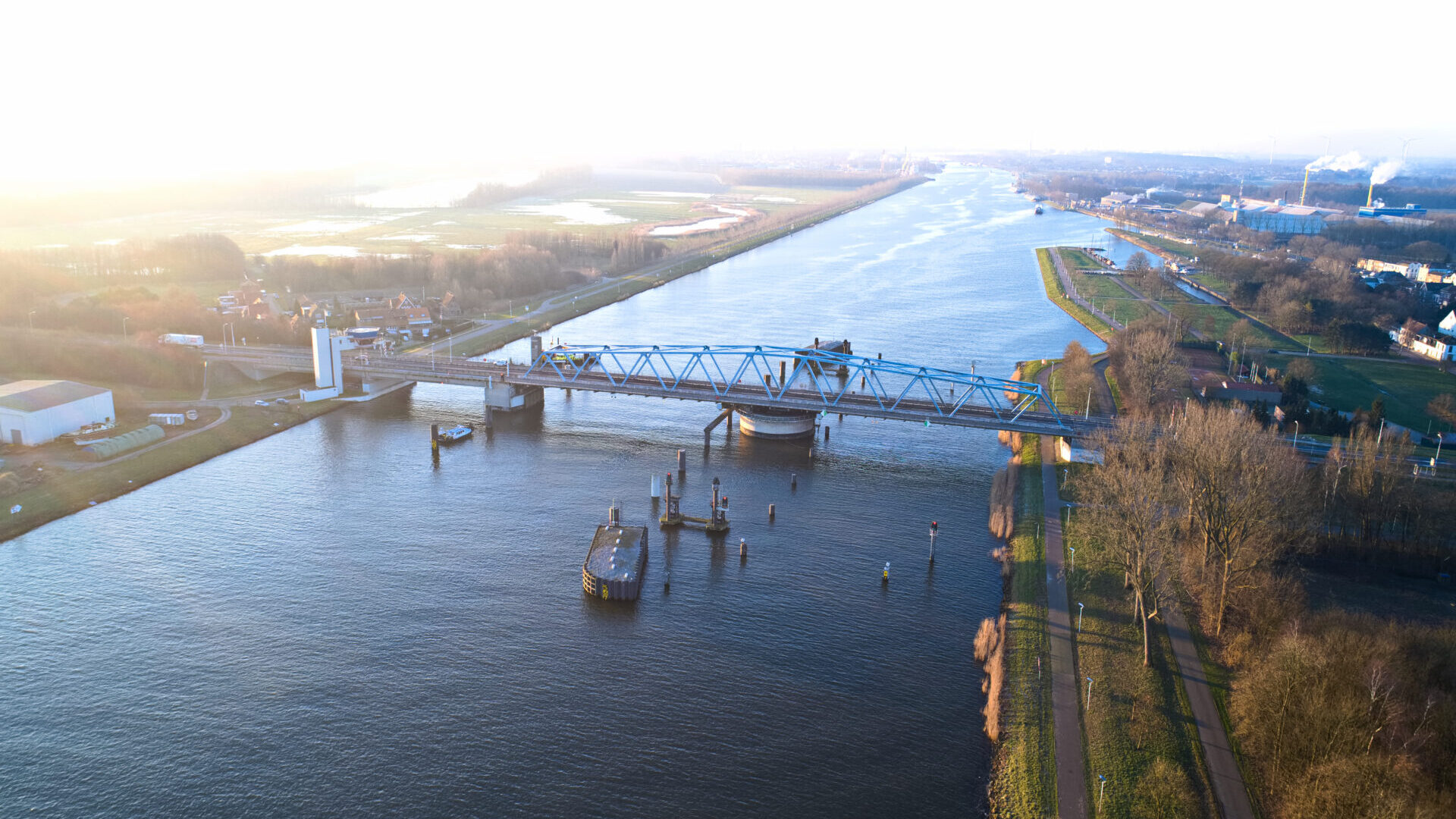
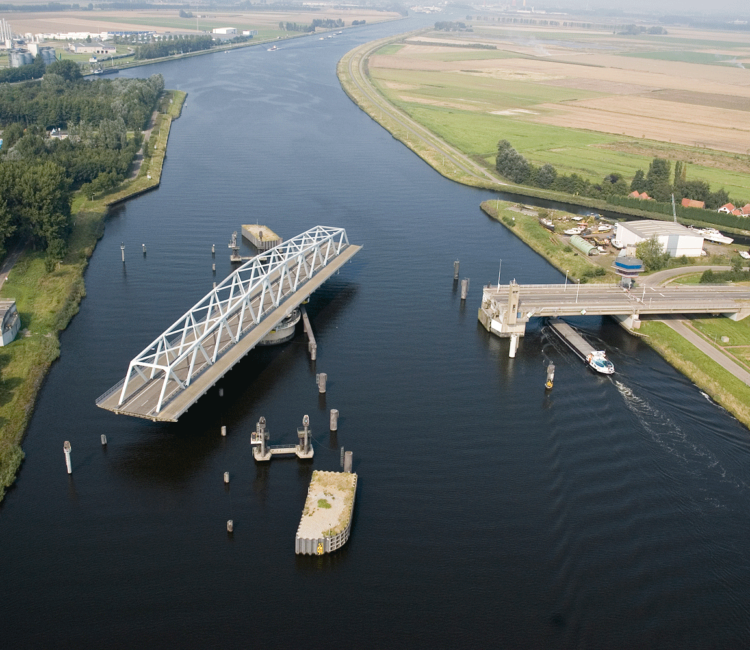
The swing bridges at Sluiskil (N62) and Sas van Gent (N683) over the Ghent–Terneuzen Canal were once among the largest in Europe. They are made up of rotating steel truss structures and massive concrete piers, founded on shallow foundations. In recent years, the riverbed around the foundations has eroded significantly, creating deep scour holes due to currents and passing vessels. This poses a risk to the stability and bearing capacity of the bridge piers.
Our activities
Contractor F.L. Liebregts BV engaged Walhout to carry out inspection, design and advisory services to improve the stability of the bridge piers. Liebregts executed the works on behalf of Rijkswaterstaat, the Dutch governmental infrastructure agency.
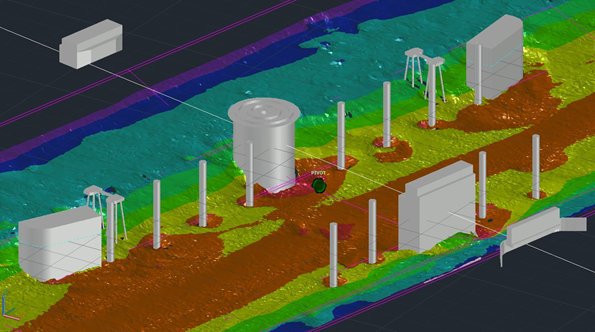
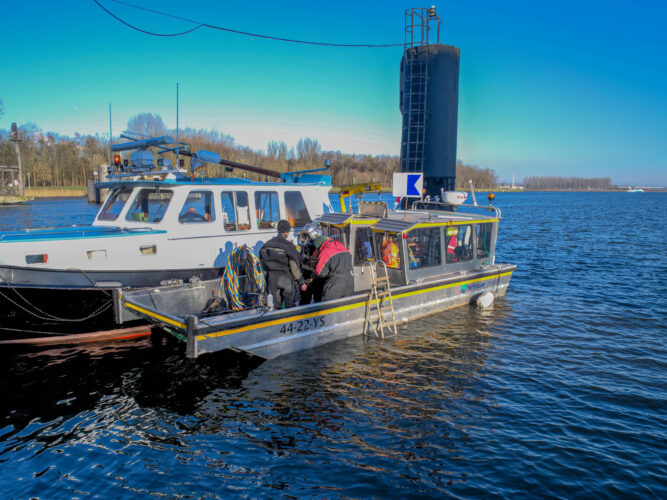
Walhout started with underwater inspections and surveys, accurately mapping the scour holes and the position of cables and pipelines around the bridge piers. Various scour scenarios were modelled in the FEA software package PLAXIS to determine to what extent soil erosion could lead to potential failure of the bridge piers. This proved to be a complex task, as the bridges were originally designed in the 1960s based on outdated standards and guidelines.
In addition, the steel buffers, sheet piles and embankments were assessed for structural safety. Additional measures were required to ensure the stability and safety of these structures. One key measure involved the installation of new bed protection. The design included rock armour in combination with modern filter solutions. Special provisions were also implemented to protect cables and pipelines, such as rock armour with colloidal concrete infill. This was computationally complex due to extreme longitudinal currents caused by passing vessels.
Finally, a monitoring strategy was developed for the future management and maintenance of the bridge piers. A key recommendation to Rijkswaterstaat was to reassess all underground cables and pipelines around the bridges.