


The challenge
Green quays
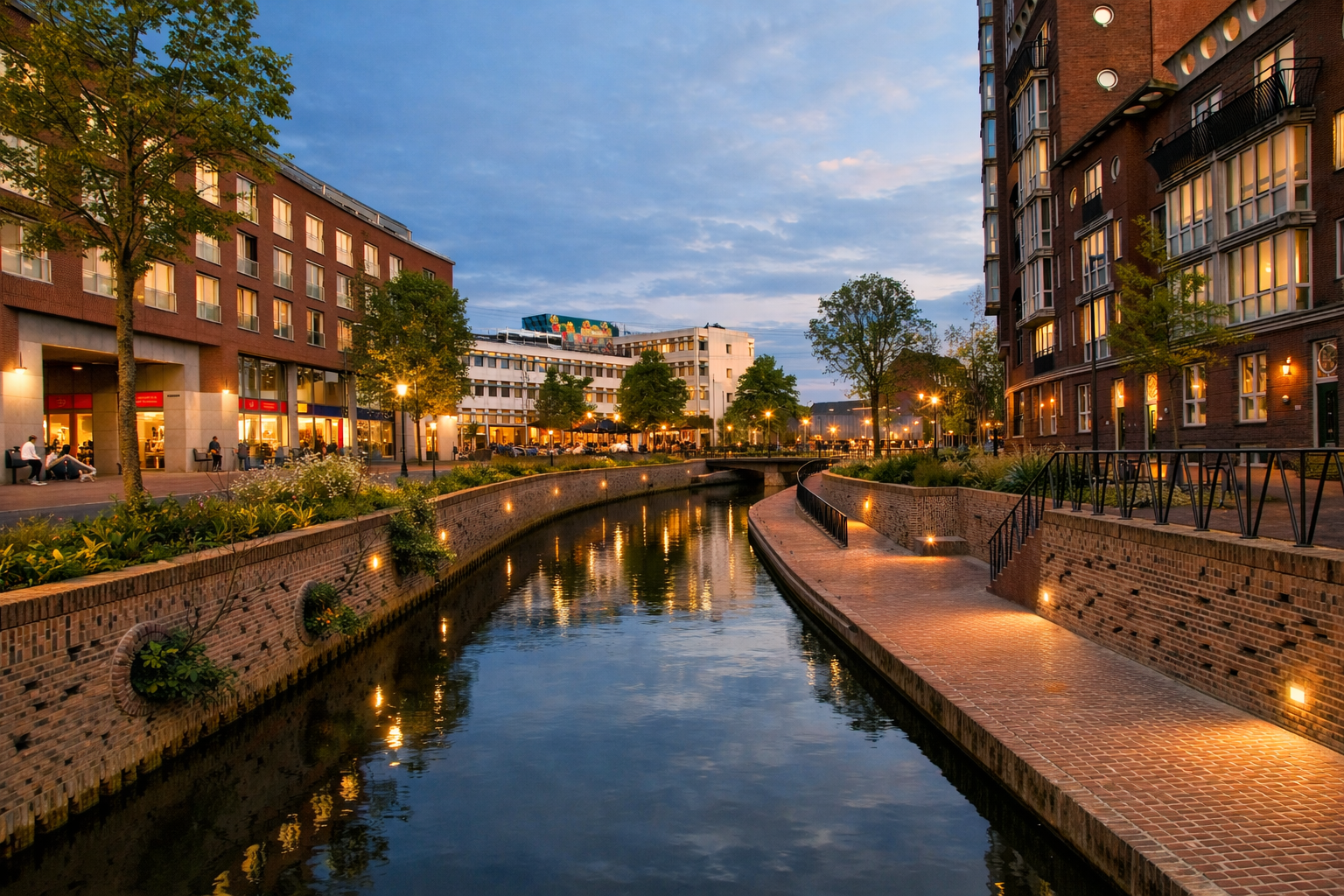
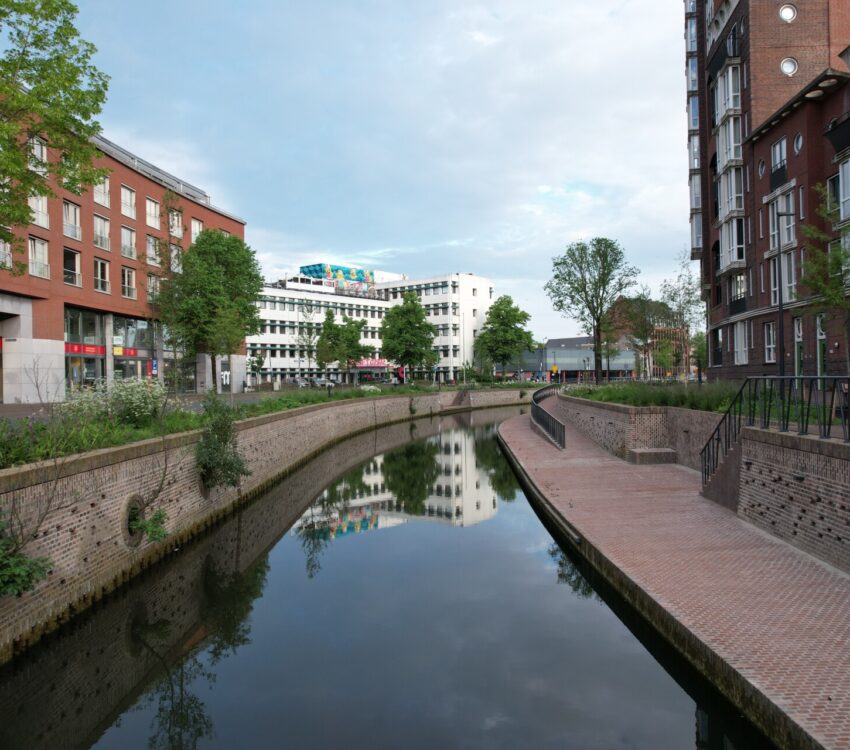
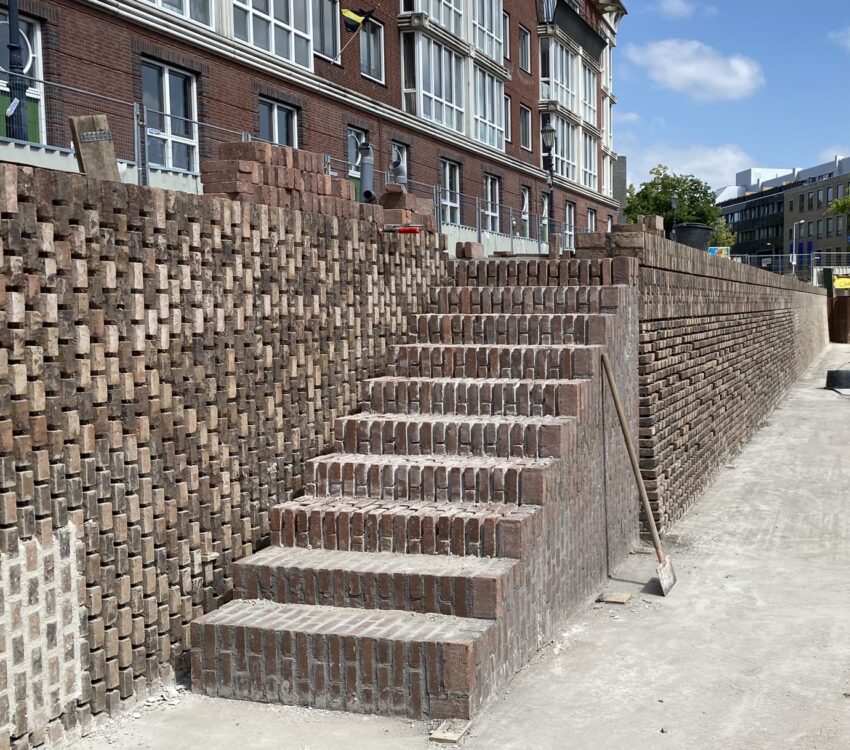
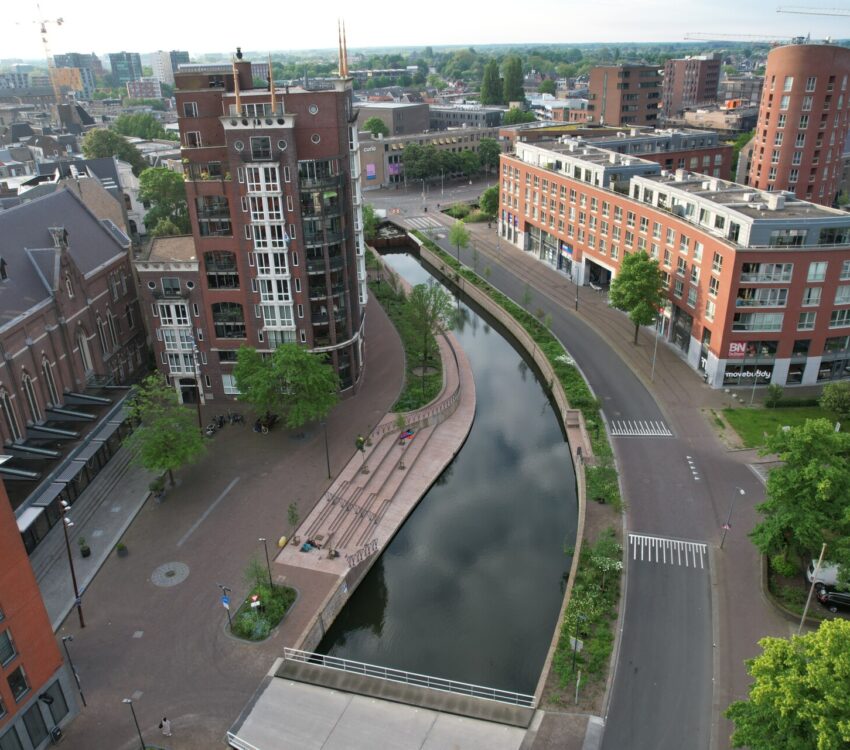
The municipality sought a new way of building along urban waterways. This led to the concept of creating the first “green quays in the world.” By incorporating openings, protruding brickwork, and cavities, a quay wall is formed that supports a vertical ecosystem in which herbaceous plants, ferns, and mosses can flourish. Openings in the walls provide space for various trees and shrubs. In addition, the quay wall includes features that serve as nesting and sheltering spaces for birds, bees, and bats. This creates a diverse environment in and along the waterfront.
Key characteristics
- Construction costs > €8.3 million
- 13,000 m³ of excavated soil
- 2,800 m² of building pits
- 2,170 tons of gravel
- 2,125 m³ of underwater concrete (60 cm thick)
- 2,800 m² of masonry (281,000 pieces)
- 85 piles, multiple foundations, 5 sets of stairs
- Modify two existing bridges
- Installation of new Toll Bridge
- Sinker construction with pipelines
Integral redevelopment
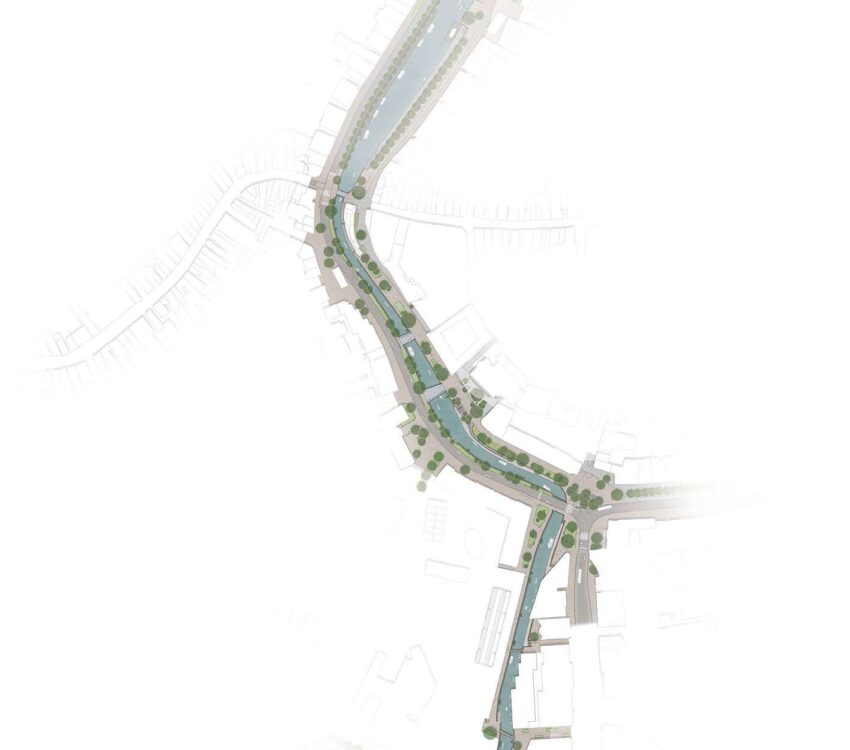
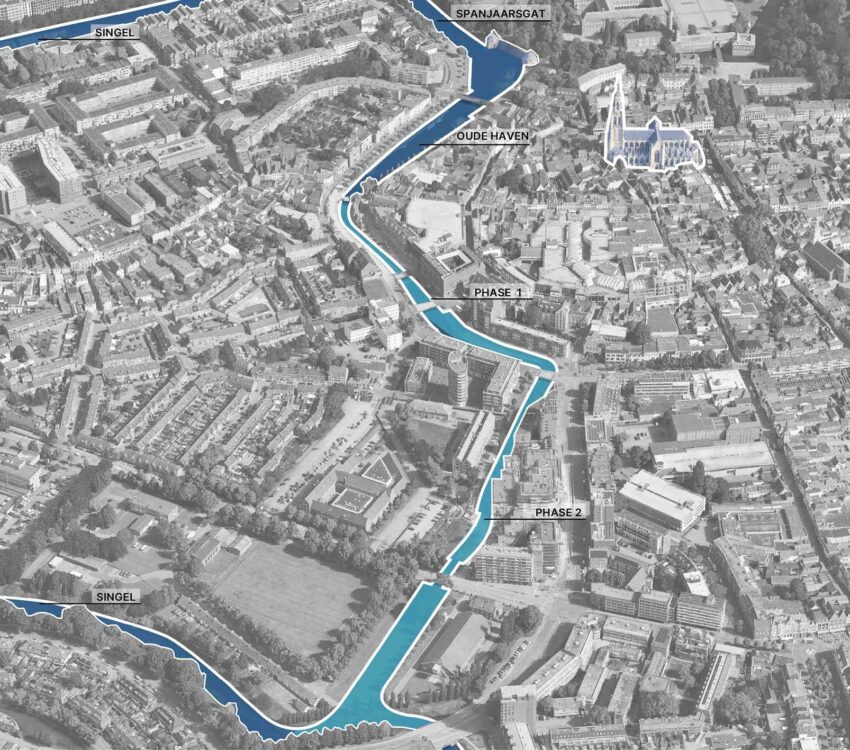
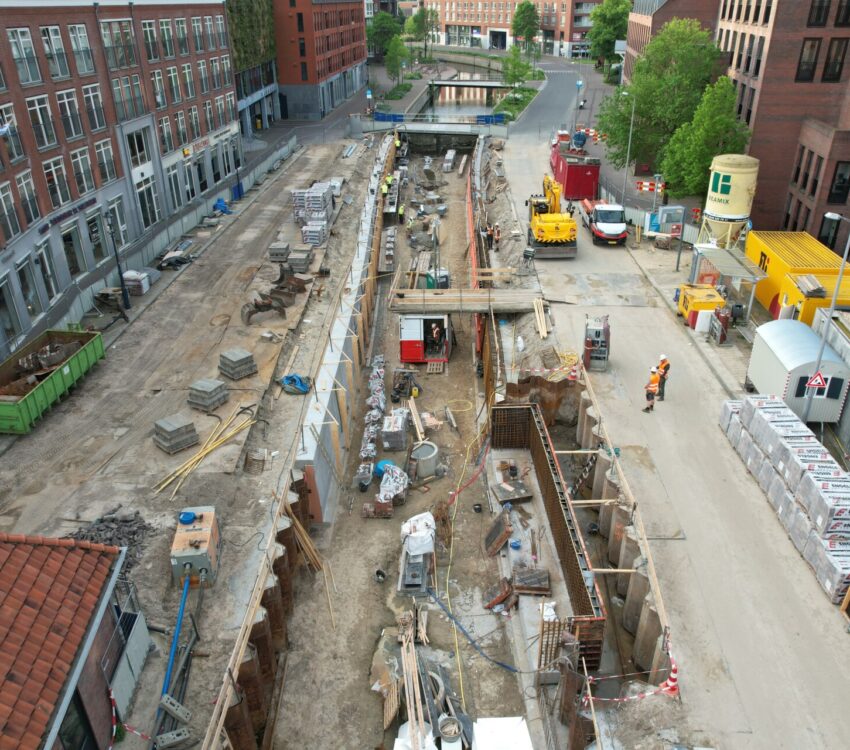
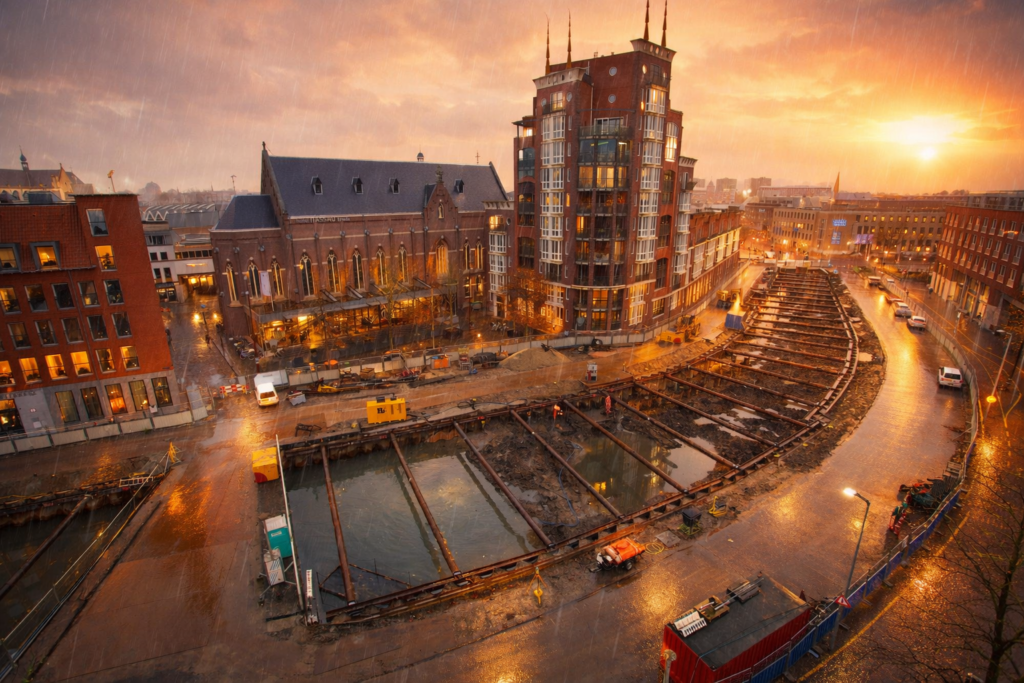
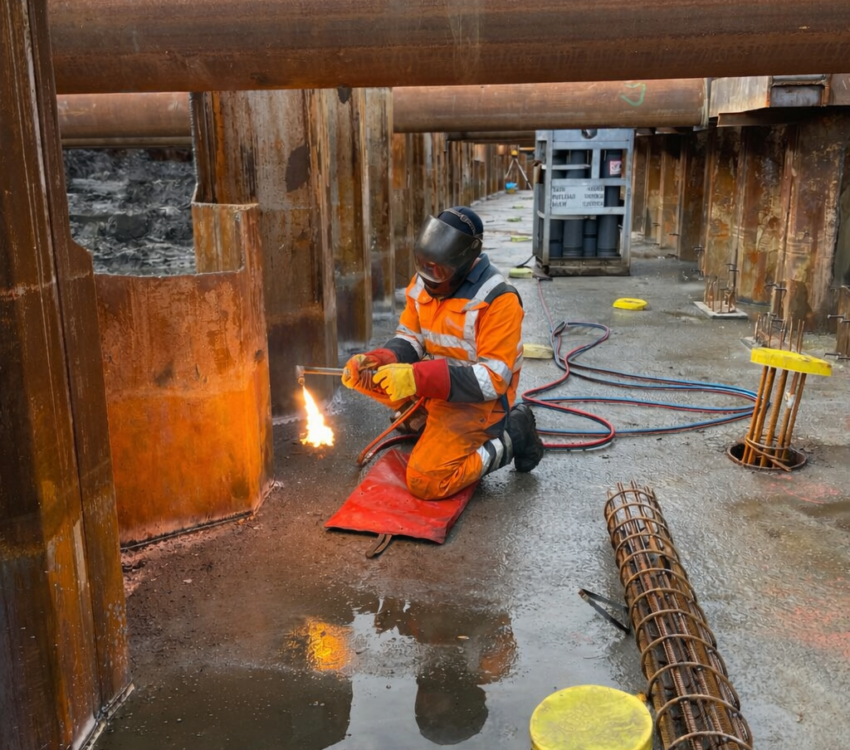
The technical challenge consisted of a complex package of civil engineering works in a dense urban environment. The municipality aimed to deepen the existing Mark without constructing new retaining walls. Concrete panels with masonry had to be installed on the existing sheet pile walls. However, the deepening introduced the risk of the sheet pile walls moving forward. To prevent this, a thick concrete floor was cast on the riverbed to act as support between the walls. This permanently covered the riverbed. At various locations, lowered walkways and stairways were added to enhance recreation and water experience.
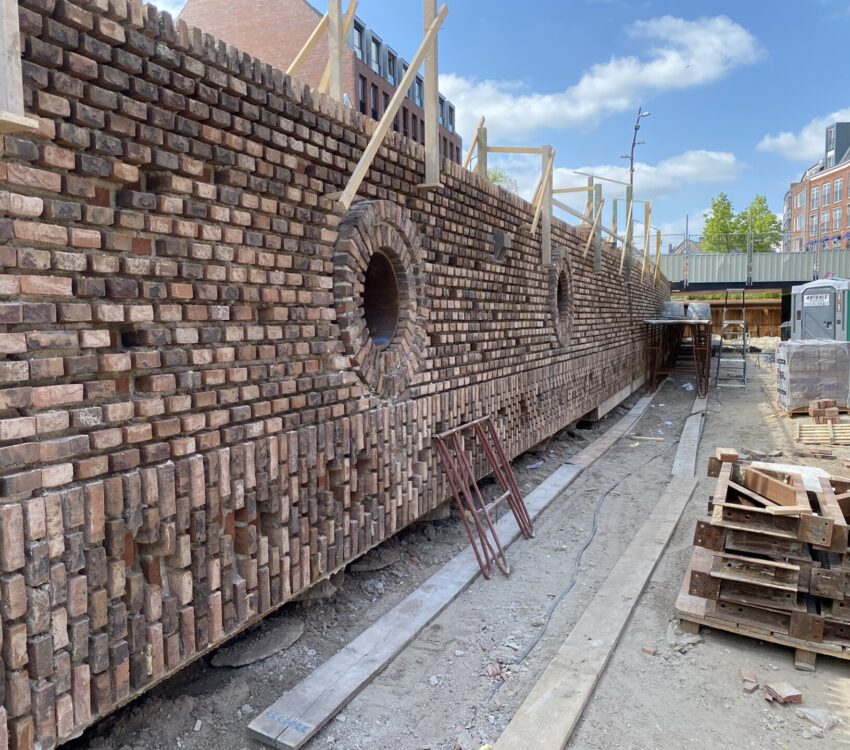
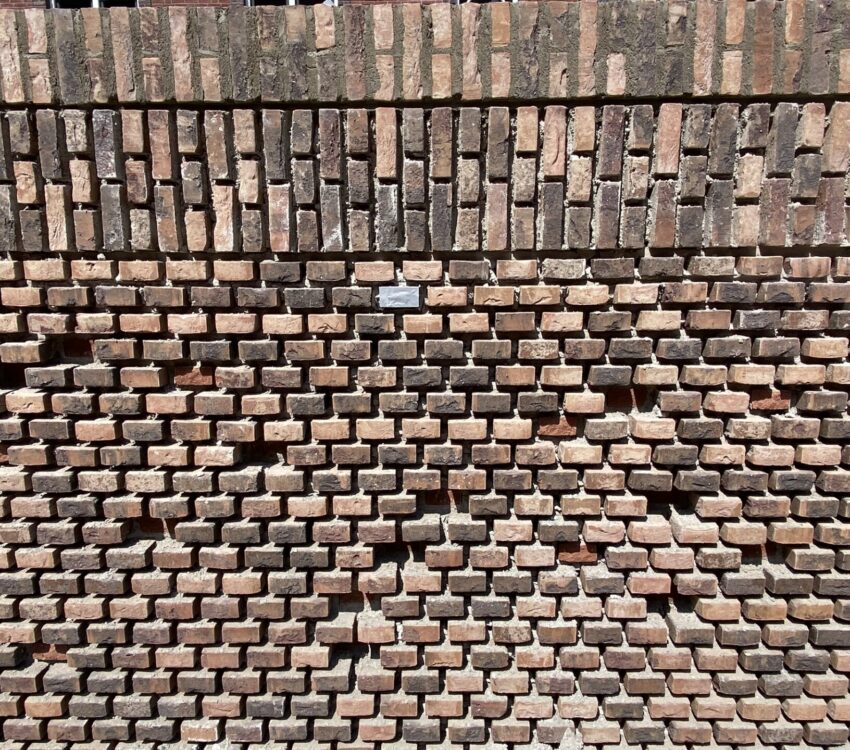
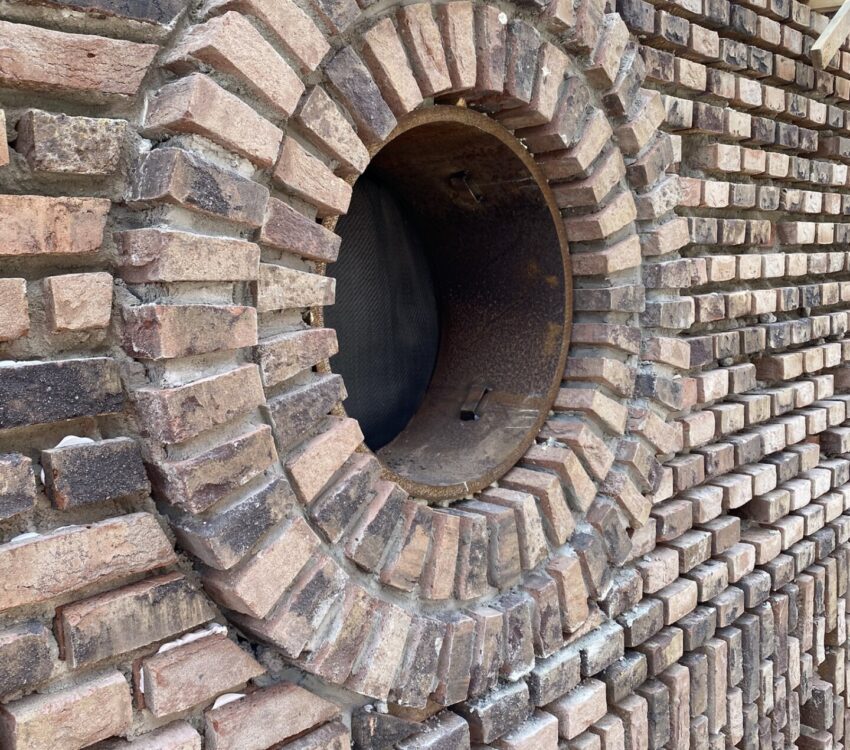
The concrete panels and masonry specified in the contract proved insufficient to withstand deformations and cracking. Therefore, an alternative solution was developed using in situ walls and steel reinforcements. The redesign of the masonry was particularly labor intensive, as the architectural sketch had to be translated into execution. Each brick and element was redesigned multiple times and then accurately bricked in at the correct position.
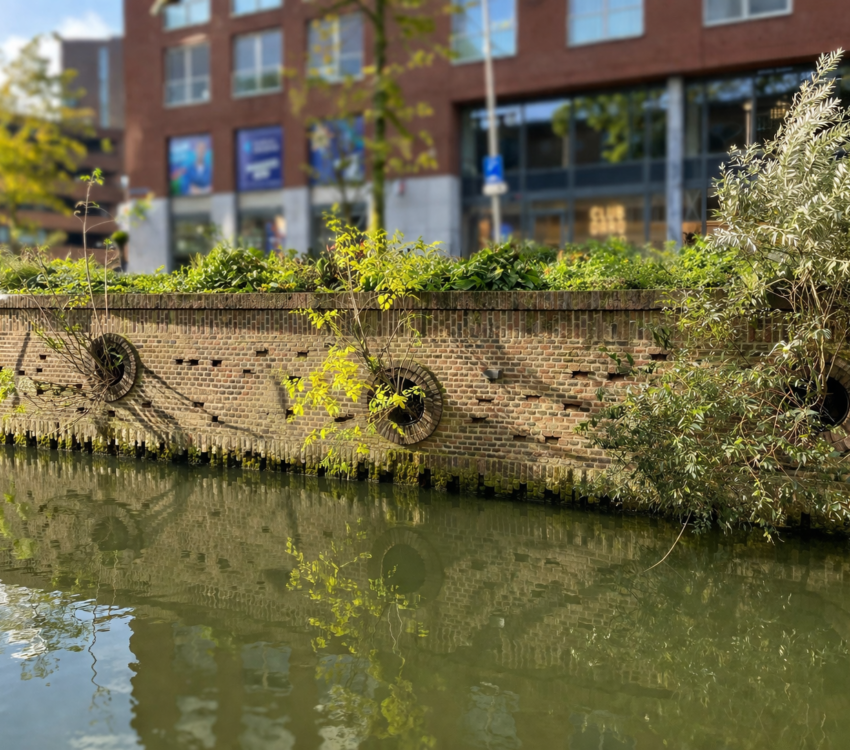
To stimulate moss, plant, and root growth within the masonry, a plant substrate was applied behind the brickwork. An unconventional approach, since plant roots are not usually desirable in joints and masonry. A revised design was required to allow the system to function hydrologically. A method for controlled application of the substrate was also developed. As a result, the original contract scope evolved into an extensive design and construct project. All walls, foundations, piles, stairways and masonry were redesigned and realized during construction.
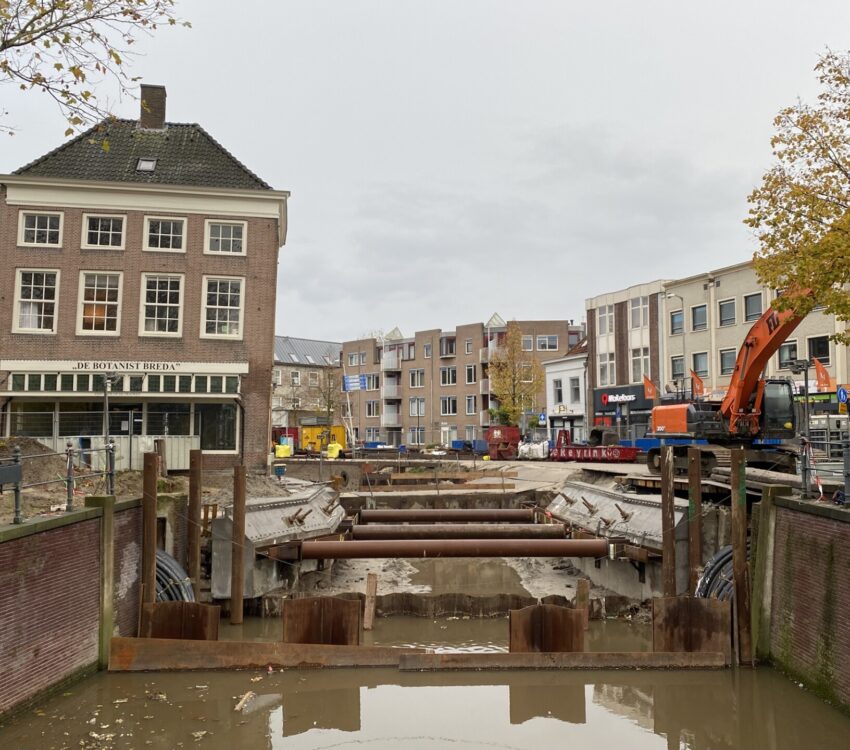
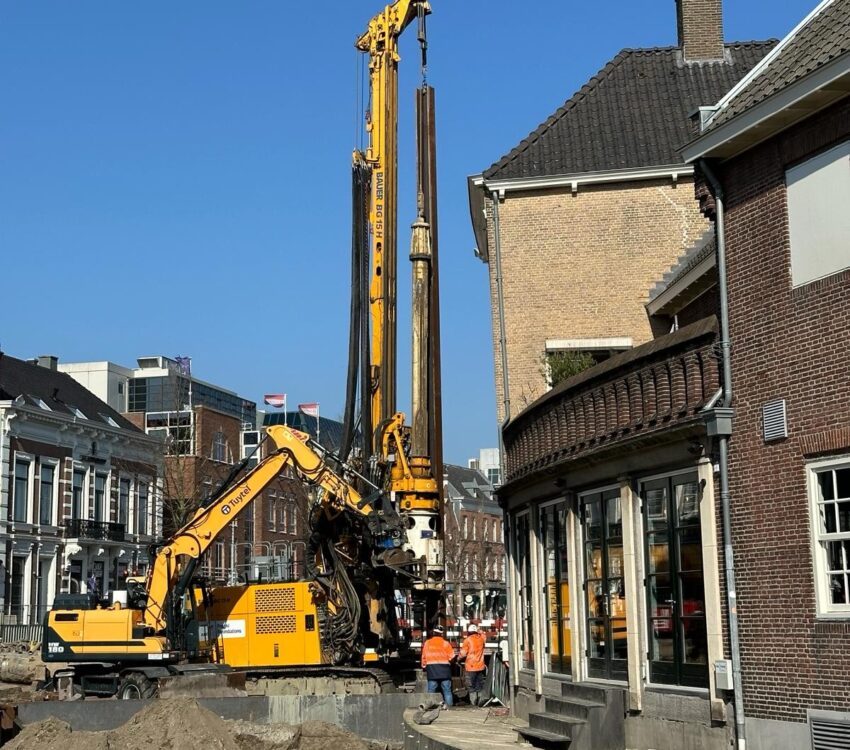
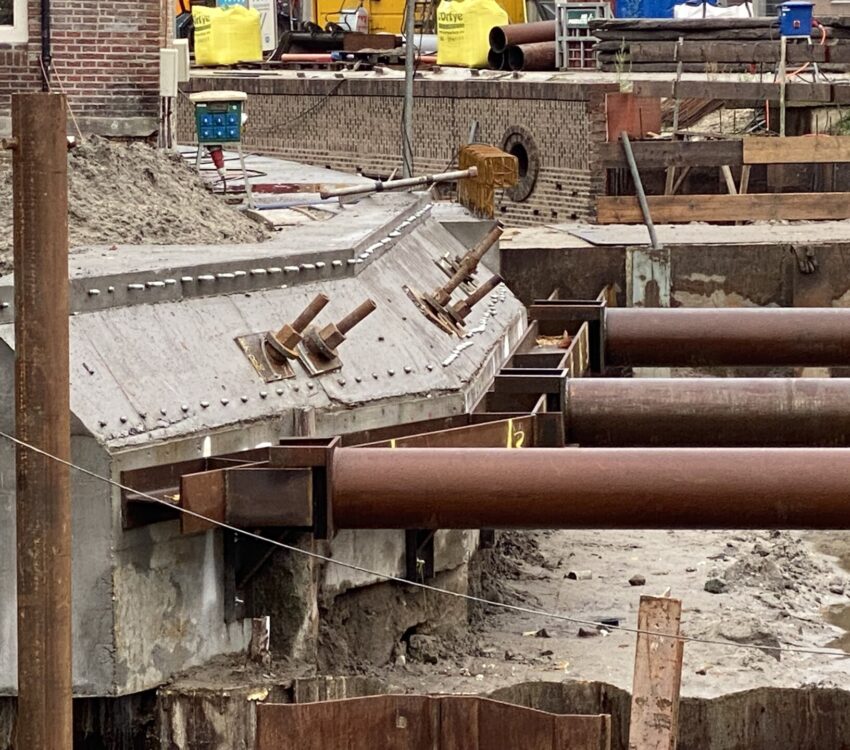
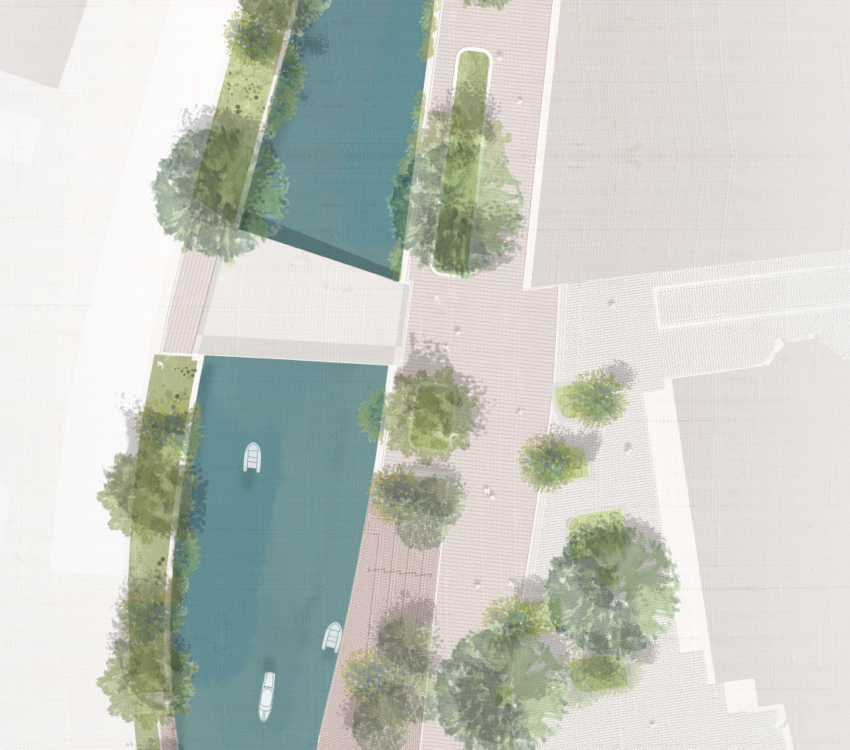
The construction of the new Toll Bridge was the most complex part of the project. Limited space, the presence of historic buildings, and existing foundation remains created a significant challenge. A new sinker with heavy pipelines had to be installed through and alongside old city walls, along with a new foundation for the bridge. Low-vibration demolition and foundation work were essential.
Our activities
- Inspections and 3D scanning
- Strength and stability analyses
- Redesign quays and walls
- Redesign concrete foundations and screw injection piles
- Redesign concrete stairways and ramps
- Redesign of urban elements
- Redesign masonry and substrate system
- Design of building pits and outriggers
- Design bridge foundations and details
- Design foundation Toll Bridge
- Advice working methods and solutions
A successful team
The success of the project is due to the decisiveness and dedication of the construction team. Client FL BV and Walhout worked together in a constructive and transparent collaboration toward the final result. Practical solutions, construction methods, and phasing were continuously developed in consultation with the municipality and its advisors, contributing to a higher quality outcome. Walhout looks back on the final result with pride and appreciation.